A countertop sample can look completely different once it is paired with your cabinet color, flooring, lighting, and backsplash plans. That is why a custom stone showroom consultation is more than a stop to pick a slab. It is the point where design preferences become practical decisions about material performance, fabrication details, budget, and installation.
For a kitchen renovation, bathroom update, outdoor project, or commercial space, the right consultation helps prevent expensive second guesses later. You should leave with a clearer direction, realistic expectations, and a team that understands how every edge, seam, cutout, and finish will work in the finished space.
What Happens During a Custom Stone Showroom Consultation
A productive showroom visit begins with a conversation about the room, not a sales pitch about a single material. Your consultant will want to understand the scope of the project, whether you are replacing existing surfaces or building new, who uses the space, and what matters most to you. Some homeowners prioritize a dramatic natural pattern. Others need a low-maintenance surface that stands up to busy family routines. A commercial client may be more focused on consistency, durability, and project timing.
Bring any inspiration photos, cabinet samples, paint swatches, flooring pieces, drawings, or appliance specifications you have available. They do not need to be final. Even early selections help narrow the field and make it easier to see whether a warm white quartz, a veined marble-look surface, or a richly patterned granite will support the overall design.
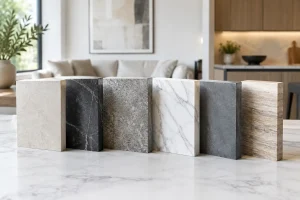
The showroom is also where scale becomes easier to judge. A small sample can suggest color, but it cannot always communicate movement, veining, depth, or the way a finish reflects light across a full countertop. Looking at larger material displays with professional guidance gives you a more accurate picture of what you are selecting.
Choosing Stone for How You Actually Live
There is no single best countertop material. The better question is which material best fits your room, habits, and visual goals.
Quartz remains a popular choice for kitchens and bathrooms because it offers consistent color and pattern options with a nonporous surface that is easy to maintain. Brands such as Vicostone, Silestone, and Cambria provide a broad range of styles, from quiet solid colors to designs that resemble natural marble. Quartz is an excellent fit for clients who want a refined look with minimal routine care. It is not, however, the right choice for every application, particularly areas exposed to intense outdoor heat or direct sunlight for long periods.
Granite brings natural variation and individual character. No two slabs are identical, which can be a major advantage when you want the surface to feel distinctive rather than uniform. Granite is durable and well suited to many kitchens, bathrooms, and outdoor applications, although specific care requirements can vary by stone and finish.
Marble has a softness and depth that many homeowners love, especially for vanities, fireplace surrounds, baking areas, and statement kitchens. It also asks for a realistic understanding of use. Marble can etch or develop a lived-in patina when exposed to acidic foods and frequent activity. For some clients, that evolving character is part of its appeal. For others, a marble-look quartz or sintered stone may offer a more comfortable balance of appearance and maintenance.
Quartzite is a natural stone valued for its dramatic movement and strength. Because every slab is different, it deserves careful in-person review. A consultation is the right time to discuss the specific slab, intended use, sealing needs, and the fabrication approach needed to highlight its natural beauty.
Sintered stone, including Dekton, is often considered for clients seeking exceptional heat resistance, UV stability, and a contemporary architectural appearance. It can be a strong option for outdoor kitchens, fireplace features, wall cladding, and hardworking indoor surfaces. Its fabrication and handling require specialized experience, which makes the fabricator’s process especially relevant to the final result.
The Details That Shape the Finished Surface
Material selection is only one part of a custom stone project. The small decisions made during your consultation have a visible effect on the final installation.
An edge profile can make a countertop feel crisp and modern, traditionally detailed, or visually substantial. A simple eased edge suits many contemporary kitchens, while a mitered edge can create the appearance of a thicker slab. Waterfall panels, full-height backsplashes, integrated shelving, fireplace surrounds, and custom ledges may also be part of the discussion when the project calls for a more complete stone feature.
Seams deserve the same attention. Large islands, long runs, and complex layouts may require seams, but their placement should be planned around slab dimensions, pattern flow, structural needs, and daily sightlines. A good fabricator does not treat this as an afterthought. During a showroom consultation, the team can explain where seams may be necessary and how material selection affects the available options.
Cutouts for sinks, cooktops, faucets, soap dispensers, and outlets must also be coordinated early. If you already know your sink and appliance models, bring those details. If not, your consultant can explain what specifications will be needed before fabrication begins. This is particularly helpful for farmhouse sinks, undermount sinks, induction cooktops, and full-height backsplash installations where planning errors can create avoidable delays.
From Initial Ideas to Precision Fabrication
The value of working with a full-service stone company is that the showroom conversation carries through the entire project. Once you choose a direction and receive a quote, the next steps should be clear: final material confirmation, site measurements, digital templating, CAD-guided fabrication, and professional installation.
Initial sketches and dimensions are useful for estimating, but final fabrication should be based on precise on-site information. Digital templating captures the actual conditions of your cabinets and walls, including details that are easy to miss in a paper plan. Walls may not be perfectly straight. Cabinets can vary slightly in depth. An island may need adjustments for overhangs, seating, or panel alignment.
That information is translated into fabrication drawings and used to guide cutting, edge work, and cutout placement. This process matters because custom stone is not a product that should be forced into a room after the fact. It should be made for the room.
At VE Stone Ltd., the goal is to manage these moving parts with personalized attention, from the first material conversation through final installation. Clear communication is especially valuable when your countertop work must coordinate with cabinet installation, plumbing, tile, electrical work, or a broader renovation schedule.
Questions Worth Asking in the Showroom
A consultation should leave room for questions. Ask which materials suit your intended application, what daily care they require, and whether the selected finish is appropriate for the level of use you expect. If you are considering natural stone, ask to see the actual slab whenever possible and discuss how variation, fissures, veining, or texture may appear in the finished pieces.
It is also wise to ask what is included in the quote. Confirm whether it accounts for templating, fabrication, installation, edge work, sink and cooktop cutouts, backsplash pieces, removal of existing surfaces, and any special handling required. Clear scope prevents a price comparison from becoming misleading.
For outdoor surfaces, ask directly about UV exposure, freeze-thaw conditions, heat, and the substrate below the stone. For commercial spaces, discuss lead times, access requirements, sequencing with other trades, and whether the material will perform appropriately under the expected level of traffic.
How to Prepare Before You Visit
You do not need every decision finalized before visiting a stone showroom. A few basics will make your time more efficient: approximate measurements, photos of the current space, cabinet and flooring samples, and a general budget range. Knowing whether you are drawn to calm, consistent surfaces or dramatic natural movement is also helpful.
Be honest about how you use the room. A client who loves the look of marble but regularly hosts large dinners may still choose marble, but should do so with a clear understanding of its character and care. Another client may prefer a material that asks less of them day to day. The right recommendation is not about pushing every project toward the same surface. It is about matching beauty, performance, and expectations.
A well-planned showroom consultation gives your renovation a stronger starting point. Bring your ideas, your questions, and the details you already have. The rest can be shaped into a custom stone solution that looks considered, functions confidently, and feels right in your home long after installation day.