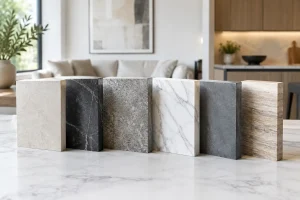
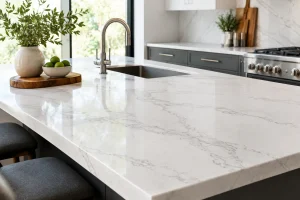
A countertop in a busy reception area, café, clinic, or multi-unit property has a different job than one in a private home. Commercial countertops must stand up to repeated cleaning, constant contact, spills, equipment, and close visual scrutiny while still supporting the character of the space. The right surface is not simply the one that looks best in a sample. It is the one that performs reliably after hundreds of busy days.
For property owners, designers, contractors, and business operators, the decision often comes down to balancing appearance, durability, maintenance, budget, and project timing. A well-planned stone countertop program brings those priorities together early, before material lead times, seam placement, or site conditions become expensive surprises.
Start With How the Space Will Actually Be Used
Before comparing stone colors or edge profiles, define what will happen on the surface every day. A polished lobby desk, a coffee service counter, a medical reception station, and a restaurant pass-through may all be called countertops, but they face very different demands.
Consider the volume of use, exposure to moisture or heat, cleaning products, food preparation requirements, and the likelihood of impacts from bags, carts, stools, or equipment. Also think about who uses the surface. A staff-only work counter can prioritize utility, while a client-facing reception counter needs a finish that makes a strong first impression from several feet away.
The layout matters just as much as the material. Long runs may require seams, and a large overhang may need hidden steel support. Openings for sinks, faucets, point-of-sale wiring, and specialty equipment need to be coordinated before fabrication begins. These details are easiest to resolve during consultation and digital templating, not after a finished slab arrives on site.
Choosing Materials for Commercial Countertops
There is no single best material for every commercial project. The proper choice depends on the environment, expected maintenance, desired look, and the level of performance required.
Quartz for consistent, low-maintenance interiors
Engineered quartz is a frequent choice for office kitchens, reception counters, retail displays, and shared amenities. It offers a consistent appearance, a broad range of colors and patterns, and a nonporous surface that is easy to maintain. Premium options from brands such as Vicostone, Silestone, and Cambria can create the look of natural stone while supporting a more uniform design across multiple areas.
Quartz is well suited to many interior applications, but it is not a universal solution. It should not be selected for areas exposed to intense direct heat or prolonged outdoor sunlight. For a commercial kitchen with hot cookware placed directly on the surface, or for an exterior serving station, another material may be more appropriate.
Granite for hard-working natural stone character
Granite remains a practical option when a project calls for natural movement, strong durability, and good heat resistance. It works well for service counters, bar tops, exterior areas, and many high-traffic work surfaces. Each slab is unique, which can add distinction to a hospitality or retail space.
Because granite is a natural material, variations in color and veining are part of the selection process. Some granites also benefit from periodic sealing, depending on the specific stone and finish. Reviewing full slabs rather than choosing from a small sample helps ensure the final result aligns with the design intent.
Marble and quartzite for statement spaces
Marble brings a level of elegance that is difficult to duplicate. It can be an excellent choice for a boutique reception desk, luxury retail display, or other low-abuse feature where visual impact is central to the design. However, marble is softer and more reactive than quartz or granite. Etching and patina may develop over time, particularly in food and beverage settings.
Quartzite offers many of the visual qualities clients appreciate in marble, with generally stronger resistance to scratching and heat. It is a compelling option for premium hospitality counters, executive spaces, and high-visibility applications. Since performance varies by slab, the specific quartzite should be assessed carefully before it is approved for a demanding use.
Sintered stone for heat, UV, and design flexibility
Sintered stone, including Dekton, is designed for demanding environments. Its resistance to heat, staining, scratching, and UV exposure makes it particularly useful for outdoor kitchens, food service areas, and locations where performance requirements are high. Large-format slabs can also reduce the number of visible seams in certain designs.
Fabrication and installation requirements for sintered stone are exacting. Proper handling, substrate preparation, and support are essential, especially around cutouts and overhangs. Choosing an experienced fabricator is part of choosing the material.
Design Details That Affect Performance
A commercial countertop is a built element, not just a slab laid over cabinets. The edge profile, thickness, supports, seams, and backsplash all affect how it looks and how it holds up.
A simple eased edge is often a smart choice for busy environments because it is clean, durable, and easy to wipe down. More decorative profiles can suit hospitality or luxury retail settings, but they may add fabrication time and create additional cleaning detail. For high-contact corners, softened edges can improve both safety and long-term appearance.
Seam placement deserves careful planning. Seams are a normal part of many stone installations, particularly on long counters or layouts with turns. A skilled fabricator can place them where they are less noticeable and where they do not interfere with high-use areas, sinks, or equipment. Material pattern, slab dimensions, access to the site, and cabinet layout all influence what is possible.
Backsplashes and wall cladding can also protect the surrounding space while creating a more finished design. In a café, clinic, or shared office pantry, a matching stone backsplash may make daily cleaning easier and help the entire area feel intentional rather than pieced together.
Why Precision Fabrication Protects the Project
Commercial schedules leave little room for rework. If cabinetry is not level, walls are not square, or equipment dimensions change after fabrication, even a beautiful material can become a difficult installation. A complete process helps reduce that risk.
At VE Stone, projects move from consultation and material selection to digital templating and CAD-guided fabrication before final installation. Digital measurements capture the actual conditions of the site, allowing the fabrication plan to account for walls, cutouts, seams, and finished dimensions. This is especially valuable in commercial renovations, where existing conditions often differ from original drawings.
Clear coordination with the general contractor, millworker, designer, and equipment suppliers is equally important. Confirming appliance specifications, sink models, faucet locations, and access routes before installation helps prevent last-minute adjustments. For occupied spaces, installation timing should also account for customer traffic, dust control, elevator access, and business operations.
Plan for Maintenance Before the Counter Opens
Every surface benefits from a realistic maintenance plan. The best material is one the staff can care for consistently without complicated procedures or special handling.
For most stone surfaces, daily cleaning with a soft cloth, warm water, and a pH-neutral cleaner is sufficient. Harsh abrasives, strong acids, and aggressive degreasers can damage certain finishes or dull the appearance over time. Natural stones may require sealing on a schedule based on the material and use, while quartz generally does not require sealing.
Provide cleaning guidance to the people who will actually maintain the space. This simple step is often overlooked, yet it protects the investment and keeps the surface looking polished long after opening day. If a countertop will face heavy food service, chemical exposure, or outdoor weather, discuss those conditions before finalizing the material.
Budget for the Whole Installation, Not Just the Slab
Material price is only one part of a commercial countertop budget. Fabrication complexity, edge details, cutouts, seam requirements, demolition, site access, support steel, and installation conditions can all affect the final investment. A less expensive slab may not be the better value if its layout creates more waste, additional seams, or maintenance concerns.
A detailed quote should clarify the scope so the project team can compare options accurately. It is also wise to consider lifecycle value. A surface that is easy to maintain, fits the use of the space, and remains visually appealing can reduce replacement and repair costs later.
The most successful commercial countertop projects begin with a practical conversation about use, not just color. Bring cabinet drawings, equipment specifications, finish samples, and a clear sense of how the space will operate. With the right material and precise fabrication plan, the finished surface can handle the work behind the scenes while giving every visitor a reason to notice the space.